Extra Life (and Decay)
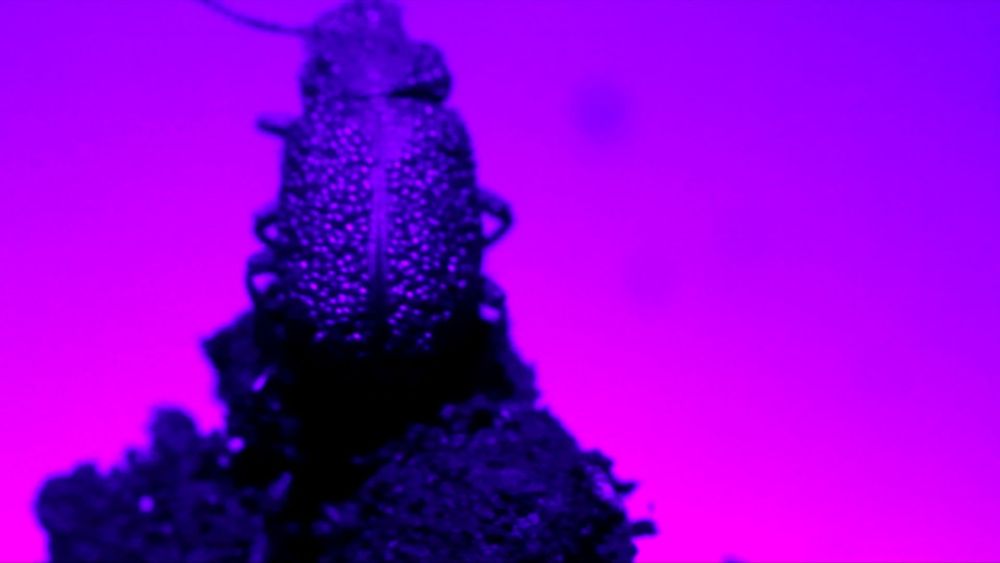
Stéphanie LagardeA polyphonic narrator—filmmaker, parent, forest, insects, fungi, childcare worker—declare their absolute refusal of labor exploitation, and the necessity to join collective bodies in resistance. Who ordered legibility? Extra Life (and Decay) celebrates hospitality as a survival tool to fight morbid politics of isolation. An ode to the multitude, the illegible, the unmeasurable.
The Rabbit Always Dies
Oona TaperAn experimental documentary that reveals facts and fantasies of the history of pregnancy tests from the 1930s-60s, which relied on the use of live frogs and rabbits. These pregnancy tests changed the world: they expanded our understanding of hormones, gave women more reproductive choice, but also caused ecological crisis–devastating certain amphibian populations.
The world was always full of us
Anouk VerviersThe world was always full of us is the second chapter of a dystopian trilogy that examines womb-related chronic pain. In this speculative future, those dealing with pain have merged with their treatment and transformed themselves into cyborg feminists who have the power to act not only on but with their pain. All seven performers in the film live with womb-related chronic pain, forming a sense of community in this shared experience.
Refusing (Reproductive) Labour: Ecological Solidarities
Refusing (Reproductive) Labour: Ecological Solidarities is shaped by encounters with the injustices of labour under capitalism, the imposition of the nuclear family, and the medical-industrial complex. This film program seeks to acknowledge economic and ecological collapse as two threads of the larger knot that make up our moment of global polycrisis. Faced with the failures of modernity, its story of progress and the separability between humans and the rest of nature, these filmmakers imagine otherwise–offering alternative ways of being in relation. Stéphanie Lagarde, Oona Taper and Anouk Verviers are worldbuilders, playing with fact and fantasy, experimenting with polyphonic, interspecies narrators, and conjuring dystopian visions (real and imagined). These films are united by a desire for new solidarities, building (interspecies) relationships, and forming alliances with the more-than-human world.
Throughout the program, intentional gatherings of women and non-binary folks are joined by a series of strange bedfellows: rabbits, frogs, rocks, fungi, citrus, and trees are central characters, too. Opening with Stéphanie Lagarde’s Extra Life (and Decay), the unmanaged forest with its mycelial enmeshment represents the possibility of collective resistance to the demand for “controllable normalized units of profitability.” The inclusion of non-human kin is literal in Oona Taper’s The Rabbit Always Dies as it focuses on the absurd scientific experiments that led to the pregnancy tests of the twentieth century that relied on live frogs and rabbits. In Anouk Vervier’s The world was always full of us, feminist cyborgs cross distant mountain ranges to seek care for womb-related chronic pain, invoking rockslides or scree as metaphors for endometriosis. In either case, loose rocks and debris tumble downwards— piling up on each other, finding moments of temporary stability with the potential to give way and fall to pieces once more, like errant endometrial cells accumulating.
Each film also reveals different ways that reproductive health and labour are inextricably bound with the demands of late-stage capitalism and the desire for infinite economic growth. In Extra Life (and Decay), the narrator points to the ways that care work is under-valued and stripped of resources as their child enters daycare and the Deutsche Bank declares a new era for the global economy: “The Age of Disorder.” The sutures from Lagarde’s birth are described “like purse strings ready to be pulled tight,” and in the sweet tones of baby talk, she chronicles the origins of capitalism and wage labour to her infant. The enduring prioritization of wealth accumulation is a driving factor in Taper’s chosen subject of the Hogben pregnancy test, which gained popularity as the use of African clawed frogs was fast and cheap. But the Hogben method had a hidden cost—shipped globally in large numbers and released into the wild, the frog became an invasive species that spread chytrid fungus, leading to the extinction of more than 200 amphibian species. In The world was always full of us, Verviers notes that for those seeking care for endometriosis, treatment is often prioritized for those pursuing procreation, the medical-industrial complex valuing compliant bodies that will contribute to a new generation of labourers over those that are “deviant,” refusing the societal expectations of child-rearing.
Please join us on Sunday April 10, 2026 from 1:00 - 2:00 PM for we felt our cells tumble, cluster, and creep. In dialogue with her most recent film, The world was always full of us, Anouk Vervier presents a new performance work. Anouk explores issues of the exhaustion of female and non-binary bodies, and aims to prefigure possible practices of care, kinship, and resistance. Location, details, and registration information are available on our website.
129 Spadina Avenue
CineCycle is not yet fully wheelchair accessible. The laneway entrance beside 129 Spadina has two steps and no automatic doors. The rear entrance has no steps, but the path is uneven. Inside, the space (including gender-neutral washrooms) is all on one level. We're working with the 401 building to improve accessibility. If you have any specific access needs or would like to arrange a walkthrough, please get in touch.
For a map to CineCycle, click here
(ARTISTS)